
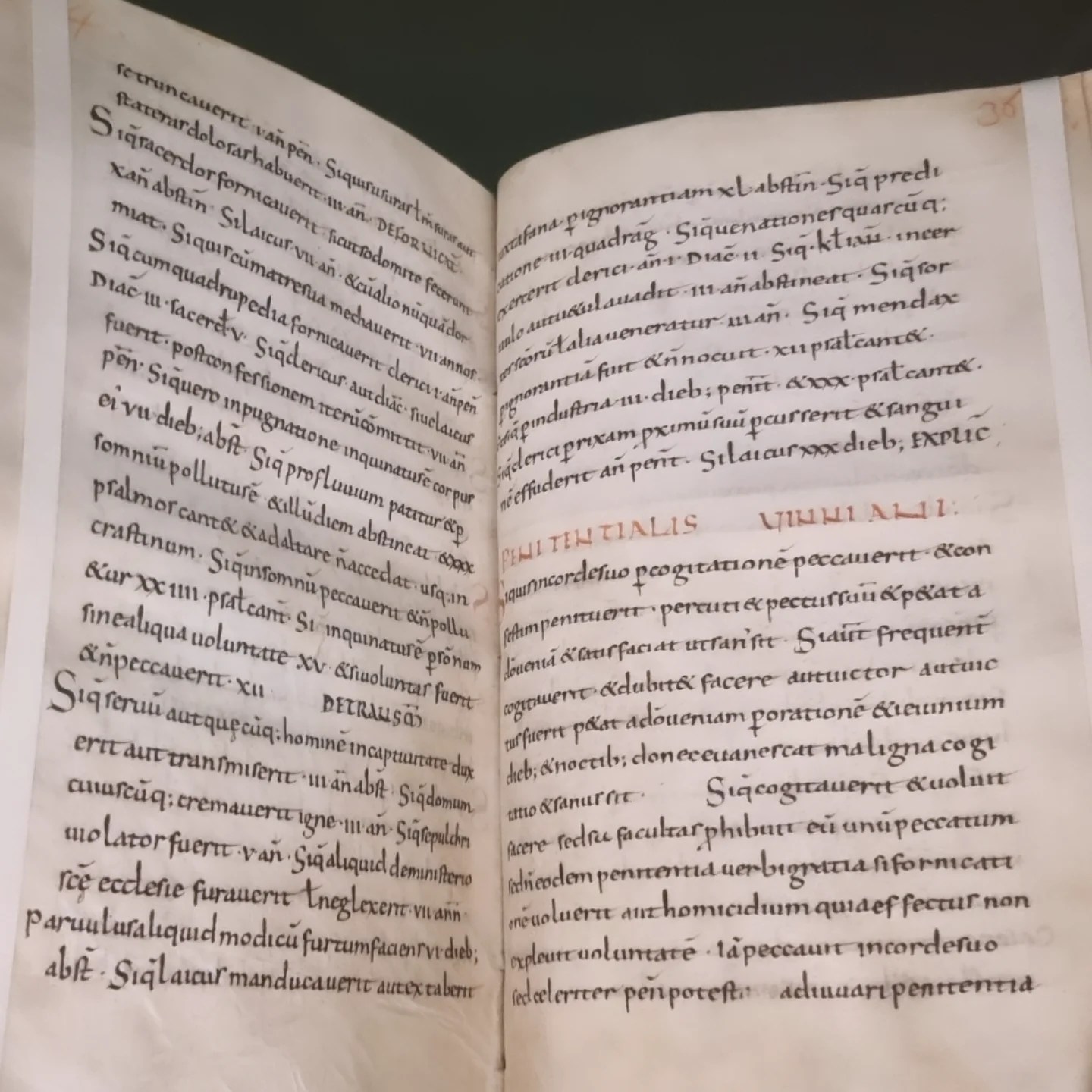
Penitentials, or handbooks of penance, were practical manuals compiled by learned ecclesiastics to assist confessors in administering confession and assigning appropriate penances. These texts typically contained systematic lists of sins paired with corresponding penances, aiming to standardise pastoral responses to moral transgressions. Though their basic structure was consistent, penitential authors often differed in their judgements regarding the most fitting penances for particular sins, reflecting variations in theological outlook, regional custom, or monastic tradition. Stylistically, penitentials are marked by concise, unadorned language and brief, direct canons that prioritise clarity and utility over rhetorical flourish.
The earliest penitential texts emerged in the Insular world, possibly in Wales, with the first surviving examples dating from the sixth century. These early works, are relatively brief and do not uniformly assign penances; their format shows influence from synodal acts and early church rulings on penance, though these earlier texts did not focus exclusively on the subject. Meanwhile, monastic rules addressed sin and purification but primarily concerned monks and nuns rather than the wider Christian community.
Penitentials appear to have been produced as a new textual genre synthesising various ecclesiastical sources—such as synodal decrees, monastic rules, and pastoral instructions—specifically focusing on confession and the moral regulation of all Christians. From the late sixth century onwards, Irish scholars refined and expanded the genre, from where it spread throughout the Western Christian world.
Produced both in the Insular and Continental contexts, penitentials were written in Latin and vernacular languages such as Old Irish and Old English. Because these manuals were intended for confessors working with real people facing everyday moral challenges, they were influenced by normative legal texts. In medieval Christian societies, crime and sin were often intertwined, with many offences treated simultaneously as both legal infractions and moral failings. This overlap is reflected in secular laws reinforcing the importance of confession and penance, and penitential texts prescribing social reparations to victims.
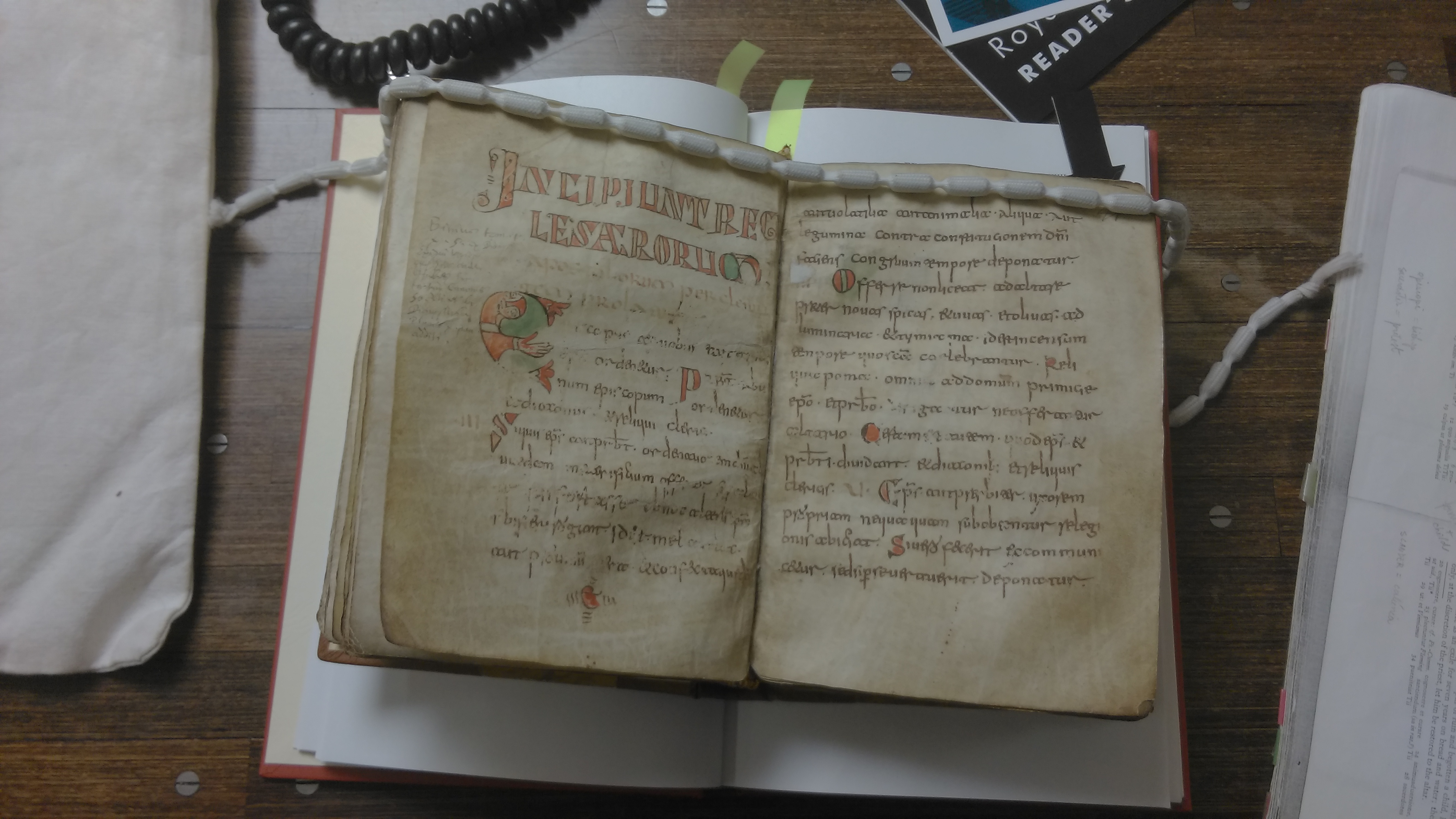
Consequently, penitentials were frequently transmitted alongside canon law collections, and less often with monastic rules, illustrating their role at the intersection of legal, ecclesiastical, and pastoral concerns.
By the twelfth century, penitential literature evolved into a more complex and comprehensive documentary form known as the confession manual, further broadening its scope and influence.




 Medieval Penitential Literature